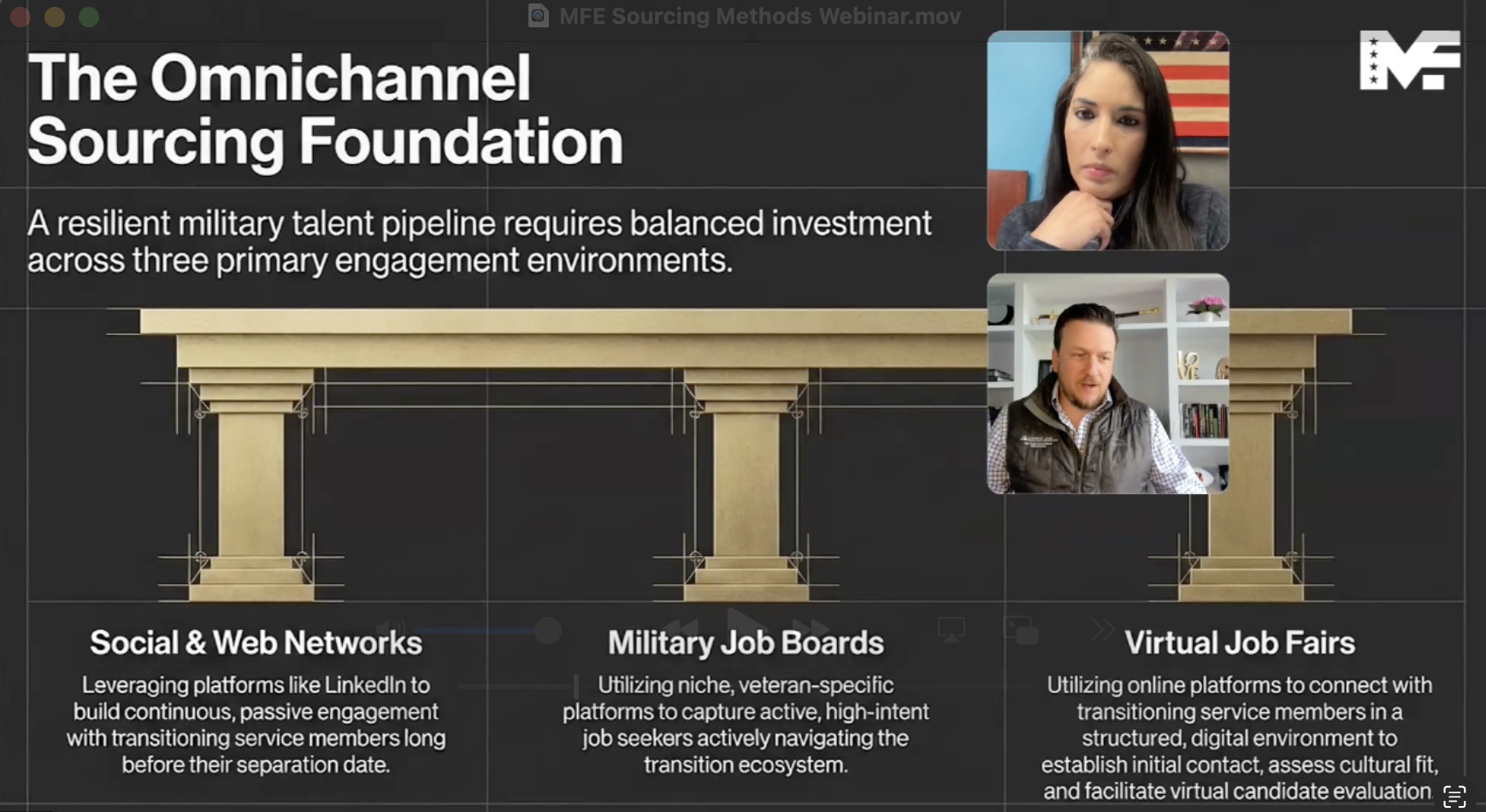
In Veteran recruiting, waiting until a service member is actively discharging is a critical mistake too many organizations make. Transitioning out of the military is a complex process, and during formal transition programs like TAP and TAMPS, service members are often overloaded with tasks, next steps, and an overwhelming number of interested employers knocking on their doors. Because they don’t want to wait until the last minute to make an uninformed choice, about 70% of those who discharge will naturally gravitate toward companies they are already familiar with.
To combat this, employers need to treat their employment brand similarly to a consumer brand. Top organizations begin engaging candidates up to three years before their discharge date.
While you can’t make a hiring decision that early, recruiters can track these individuals in dedicated databases based on their future availability, send follow-ups, and make introductions to internal teams to educate them on different roles. Keeping the door open and ensuring the candidate has a human being to connect with is one of the most powerful strategies an employer can employ.
However, reaching military candidates early requires cutting through immense advertising noise. A foundational framework for this is the “777 rule,” which states that a candidate needs to see you seven times, hear you seven times, and engage with you seven times before taking action.
In the past, sales strategies relied on roughly 15 touches to open a door, but today’s crowded digital landscape often requires 25 to 30 touches just to generate curiosity.
In order to achieve 7, 7, and 7, employers need to exist everywhere the military community exists. This can look a lot of different ways. It can involve wrapping digital fences around military installations, using search engine marketing, and employing behavioral targeting to feed specific ads to specific professions. For example, showing an HVAC engineering role to a military engineer in their local geography.
It also means reaching the entire family unit, such as running unskippable 15-second streaming ads while children watch Saturday morning cartoons on YouTube, ensuring the employment message is seen throughout the entire life cycle of a military career. Broad-stroke print advertising also plays a role. For example, Cushman & Wakefield ran a two-page magazine spread featuring an aircraft carrier, simply stating that the skills needed to run a carrier translate directly to commercial real estate. This omni-channel approach to Veteran recruiting ensures that when a service member is finally ready to transition, your organization is already top-of-mind.
Ready to elevate your brand and join an elite network of vetted, top-tier employers? Stop fumbling in the dark and let us help you turn your Veteran recruiting initiatives into metric-driven, strategic results. Partner with us to access the resources, credibility, and strategic guidance you need to build a thriving military pipeline. Connect with our membership team today to learn how becoming a recognized Military Friendly® employer can transform your organization.