The Looming Crisis and the “War for Students”
The higher education sector in the United States is currently navigating a significant challenge, often referred to as the “enrollment cliff.” This isn’t a speculative future; it’s a demographic reality stemming from declining birth rates after the 2007 recession. This looming crisis, characterized by a projected sharp decline in the number of traditional college-aged students, necessitates innovative and strategic approaches to recruitment and retention.
The context is dire: total undergraduate enrollment has already decreased by a staggering 15% since 2010, marking a longer-term trend of decline that predates the most acute “cliff” projections. [Source: National Student Clearinghouse Research Center] This translates into a “war for students” among institutions, impacting financial health, potentially leading to program cuts, and even campus closures, particularly in competitive states or regions with high concentrations of colleges. Therefore, the imperative for action is clear: institutions must adapt to a “new reality” and fundamentally rethink their value proposition to ensure long-term viability and success.
The Crisis Deep Dive: Understanding the Forces at Play
Several interconnected forces are driving higher education towards this precipice:
- Demographic Shifts: The primary driver is a shrinking pool of high school graduates. The Western Interstate Commission for Higher Education (WICHE) projects that by 2039, there will be 15% fewer 18-year-olds annually than in 2026. Some states will feel this impact far more acutely, with projected declines in high school graduates between 2026 and 2037 reaching alarming levels, such as Illinois (32% decline), California (29%), and New York (27%).
- Changing Perceptions of College Value: Increasing skepticism about the high cost of college, coupled with a relatively strong labor market, has drawn more high school graduates directly into jobs or vocational training. Recent data from the National Center for Education Statistics (NCES) indicates that only 62% of high school seniors immediately go on to college after graduation, a notable decline from previous years.
- Financial Pressures: The decline in “full-pay” students exacerbates budget shortfalls, forcing institutions to rely on increasingly high discount rates (the difference between the sticker price and the actual amount students pay after grants and scholarships). While state funding is a critical component of public university budgets, it hasn’t kept pace with rising costs in many regions; for instance, Illinois has seen a significant decline in state support per student over the past decade. [Source: Illinois Board of Higher Education]
- Specific Enrollment Declines: The impact is not evenly distributed. The largest declines are seen in freshmen at four-year public and private nonprofit institutions. Furthermore, community colleges have been particularly hard hit, experiencing plunges of nearly 40% in enrollment over the past decade. [Source: National Student Clearinghouse Research Center] This comprehensive assault on traditional enrollment models demands a multifaceted response.
Diverse Strategies for Adaptation and Growth
Addressing the enrollment cliff requires institutions to look beyond traditional recruitment methods and embrace a broader definition of prospective students.
- Targeting Nontraditional Students: Colleges must recognize that the pool of potential students is much larger than just recent high school graduates.
- Adult Learners: Represent an “untapped market.” Despite their enrollment falling by half since the Great Recession, due to factors like economic shifts and changing priorities, they offer significant potential. Flexible, shorter-term programs, micro-credentials, and leveraging technology for online and hybrid formats are key to attracting this demographic.
- Raising Retention Rates: A crucial internal strategy. Initiatives like “intrusive advising” (proactive outreach, text alerts for missed classes, invitations for counseling) can significantly increase student return rates. According to a study by the National Bureau of Economic Research, for example, found that proactive, personalized advising interventions can boost retention by several percentage points.
- Programmatic and Brand Innovations:
- Niche Programs: Tailoring offerings (e.g., marine biology, esports management, data analytics bootcamps) to meet evolving student interests and workforce demands.
- Direct Admissions Programs: Proactively offering admission to qualified students based on academic records, streamlining the application process, and reducing barriers.
- Building a Strong School Brand: Communicating core values, creating a positive student experience, encouraging advocacy from current students/alumni, leveraging social media, and consistently measuring effectiveness. A strong brand can significantly influence prospective students’ choices.
- Prioritizing Diversity and Inclusion: Creating an environment where all students feel respected and valued is not just an ethical imperative but also a strategic advantage. Diverse campuses are more attractive and lead to higher retention rates, improving the campus community and academic outcomes for all.
The Military Community: A Strategic Imperative
Amidst these diverse strategies, one demographic stands out as a critical, often overlooked, and strategically valuable solution: the military community.
- Why target this demographic? It’s a “renewable source” of highly qualified, motivated, and experienced students, often overlooked and underutilized by institutions focused primarily on the traditional high school pipeline.
- Demographic Size: The potential pool is immense. The Department of Defense (DoD) reports that over 200,000 servicemembers transition annually from active duty, adding to a population of over 18 million veterans. When you include the millions more active duty, Guard & Reserve members, and military spouses, this represents an “enormous ecosystem” of potential learners. [Source: U.S. Department of Veterans Affairs, National Center for Veterans Analysis and Statistics; DoD, Demographics Reports]
- Key Benefits:
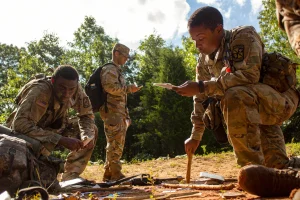
- Maturity and Experience: Military-connected students are not typical freshmen. They bring leadership skills, real-world experience, and a strong work ethic forged in demanding environments. This maturity often translates to greater focus and resilience in academic pursuits.
- Higher Success Rates: Data consistently shows that student veterans are highly successful. Student veterans were found to have a 72% success rate in higher education and average GPAs .40 higher than their civilian peers. [Source: Student Veterans of America (SVA)]
- Diversity: The military community is arguably the “largest subset of diverse talent globally.” The Department of Defense’s demographic statistics reveal that 41% of active duty service members identify as a minority group, significantly enriching campus environments with new perspectives, cultures, and ethnicities. [Source: Department of Defense, “Demographics of the Military Community” reports]
- Financial Benefits: Perhaps one of the most compelling aspects for institutions, the Post-9/11 GI Bill provides “guaranteed tuition checks” from the U.S. Government for tuition and housing for eligible students. This directly bolsters institutional enrollment and finances, providing a stable revenue stream.
- The Role of Military Friendly®: This organization serves as an “ecosystem where America and the military community connect.” It offers a systematic approach for institutions to recruit, retain, and advance military students, helping schools “build programs that effectively and efficiently tap into renewable sources of students.” By adopting the Military Friendly® framework, institutions signal their commitment to this valuable demographic, gaining access to resources and a trusted network that can transform their enrollment strategies.
Conclusion: Adapting for Prosperity
While the demographic cliff is a real and formidable challenge, institutions are not powerless. They have agency and the ability to adapt. A systematic, versus transactional approach, particularly in targeting key demographics like the military, leads to “significant, sustainable ways” to address enrollment challenges.
The colleges and universities that strategically invest in renewable talent like military-connected students will not only mitigate the impact of the enrollment cliff but will also enrich their campus communities, strengthen their financial foundations, and secure their prosperity for the decades to come. This is not just about filling seats; it’s about building a more resilient, diverse, and vibrant higher education system.
If you are interested in learning more about how you can utilize this renewable source of students known as the military community, our Military Marketing Consultants are ready to chat: Schedule a Complimentary Consultation