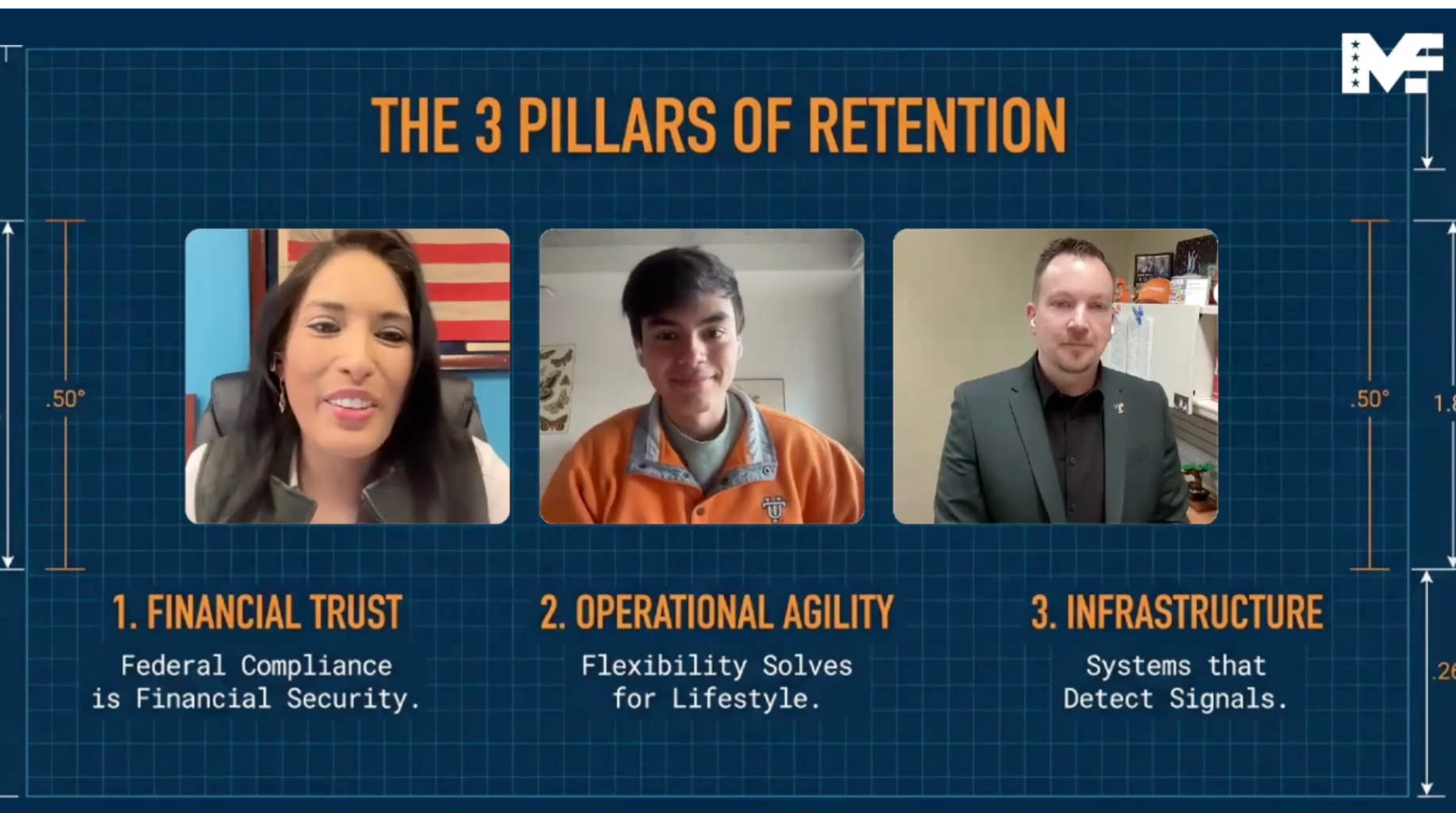
For a military student transitioning to higher education, the greatest barrier to entry isn’t academic rigor. It’s financial bureaucracy. Navigating the GI Bill, Tuition Assistance, and VR&E benefits can be overwhelming. If an institution does not proactively establish financial trust, students will withdraw before classes even begin.
During The Retention Blueprint webinar, the University of Tennessee (UT) shared its tactical approach to building financial security for incoming veterans. It starts with a simple, high-impact action: immediate human intervention.
“As soon as a student veteran or any military-connected student is admitted… we pick up the phone,” says Thomas Cruise, Director of UT’s Veterans Success Center. They proactively reach out to help students navigate the application of their benefits.
In the full webinar replay, you will learn how UT operationalizes financial trust through several specific systems:
- Targeted Digital Onboarding: UT utilizes “Vol 101,” an online orientation platform. When a student clicks “I’m military affiliated,” they are routed to a custom section detailing exactly what the GI Bill will and will not cover (such as meal plans), setting clear expectations immediately.
- Preventing BAH Shock: Many veterans expect their housing allowance (BAH) to mirror their active-duty pay. UT proactively warns students that the first BAH payment is prorated, preventing a devastating financial surprise in their first month.
- Tailored Financial Wellness: In their Transition 201 weekly seminar, UT quickly realized that standard college budgeting advice, like saving for a “cell phone bill and to go out on a Friday night”, didn’t resonate with adult learners. They shifted the curriculum to address the actual needs of military families, such as budgeting for mortgages and groceries.
- Veterans Deferment Plans & Emergency Funds: To protect students from federal VA payment delays, UT automatically places military students on a deferment plan so there are no penalties while waiting for funds. Furthermore, they maintain an emergency assistance fund to cover unexpected life events, like a $300 dead car battery, that might otherwise force a student to drop out.
Stop losing students to administrative friction.